Best for
- TCO planning
- Comparing complete installations
- Shops estimating per-job variable cost
Watch for
- Optical watts are not wall watts
- Maximum input is not average energy
- Electricity tariffs and demand charges vary
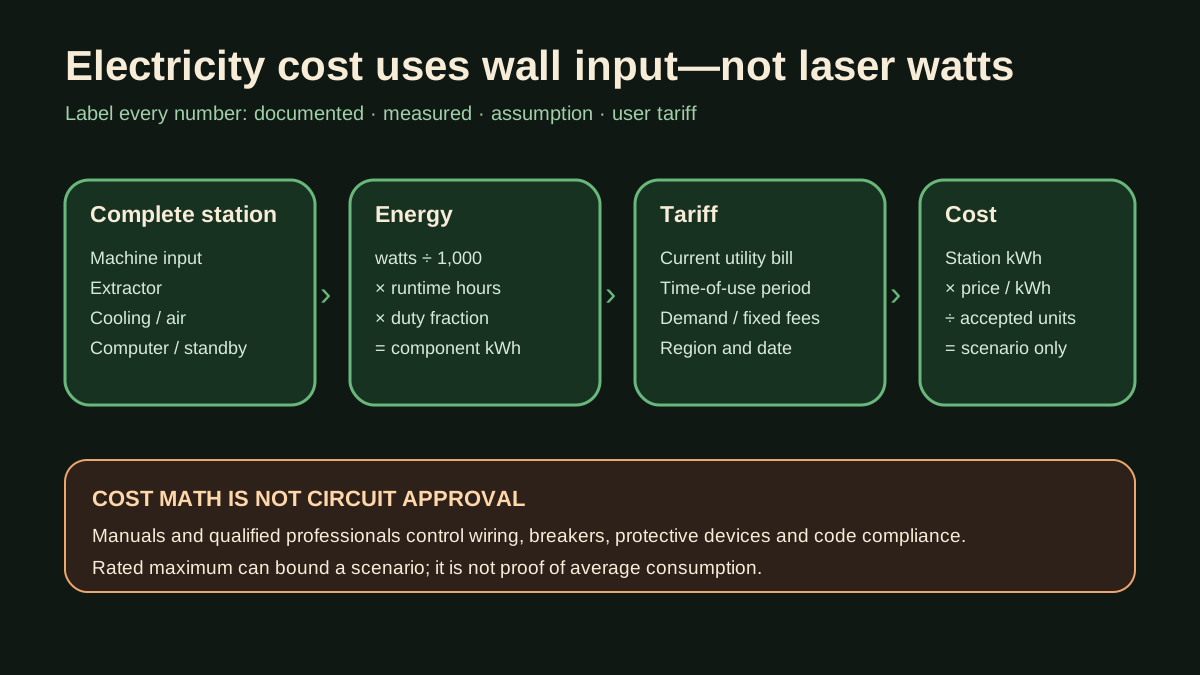
Use the complete powered station
List the machine, extractor, chiller or cooling unit, air assist or compressor, rotary, conveyor, computer and any room-level equipment intentionally allocated to the laser scenario. Use current manuals, nameplates or a suitable measured value for each item.
Do not convert optical source watts into electrical input. Do not prescribe breakers, wires or shared circuits from this cost worksheet.
Calculate energy before cost
For each component, energy in kilowatt-hours equals input watts divided by 1,000, multiplied by operating hours and an evidence-backed duty fraction when appropriate. Sum components before applying the tariff.
Label every field as documented input, measured input or assumption. A rated maximum can create a conservative planning ceiling but is not evidence of average consumption.
- Component kWh = watts ÷ 1,000 × hours × duty fraction
- Station kWh = sum of component kWh
- Energy cost = station kWh × user-entered price per kWh
Use the correct tariff
EIA explains that retail electricity prices vary by customer class and other factors. Use the user's current utility bill or tariff, including time-of-use periods when applicable, rather than a national average.
Commercial demand charges, fixed fees and taxes may not scale directly with one job. Allocate them explicitly or leave them outside the variable-cost scenario.
Allocate cost to finished output
Divide scenario electricity cost by accepted finished units, not laser head cycles. Include warm-up, setup, extraction run-on, cleaning, failed parts and idle-on time if they occur in the observed workflow.
Electricity can be small relative to labor, blanks, filters and scrap, but that must emerge from the recorded scenario—not an assumption.
What this calculation cannot approve
Cost math cannot determine circuit capacity, conductor size, protective devices, ventilation or code compliance. Follow the exact manuals and use qualified professionals where required.
Do not promise a fixed per-item energy cost before the station, tariff, product, batch and observed cycle are known.
Formula and electricity-price guidance were rechecked 9 Sep 2026. Every price, load and duty factor remains a user or site-specific input.
Decision criteria
Primary and authoritative sources
A source link supports the stated fact; it is not an endorsement.