Best for
- Buyers with an undecided laser family
- Mixed product businesses
- Teams planning multiple processes
Watch for
- Category fit is not model proof
- MOPA is a fiber subtype with extra control
- Material chemistry can override the category
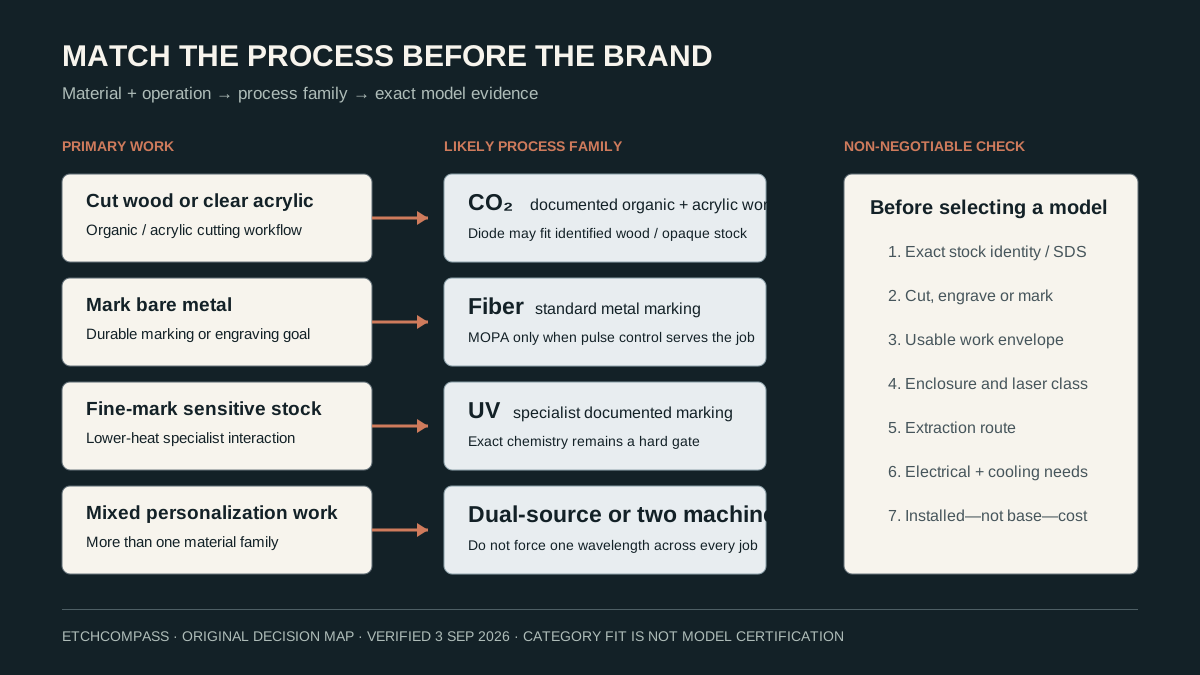
Choose the first option when…
Choose CO₂ when cutting or engraving documented wood, acrylic, leather, paper or similar materials is the primary workflow and the cabinet/extraction footprint fits.
Choose the second option when…
Choose fiber when bare-metal marking is the primary job. Choose UV when fine, lower-heat marking on an exact documented glass, plastic or ceramic product justifies the specialist cost.
Choose neither when…
Choose neither when the stock is unidentified, the intended operation is not documented or the installation cannot control beam, fumes and fire.
A useful comparison can end without a purchase. Resolve the failed material, workspace or cost gate before reopening the shortlist.
Do not confuse marking and cutting
Desktop fiber systems in this evidence set are metal-marking tools, not industrial sheet-metal cutters. CO₂ is the primary path for verified acrylic and many organic-material cutting jobs. UV is a specialist marking process for selected sensitive substrates.
Define cut, surface mark, coating removal and material removal separately before comparing power figures.
Decision criteria
Primary and authoritative sources
A source link supports the stated fact; it is not an endorsement.