Best for
- First-time commercial buyers
- Shops expanding into a second laser process
- Teams separating organic-material and metal workflows
Watch for
- Marketing may blur mark, engrave and cut
- Optical watts do not describe the complete system
- A system classification is not the embedded source class
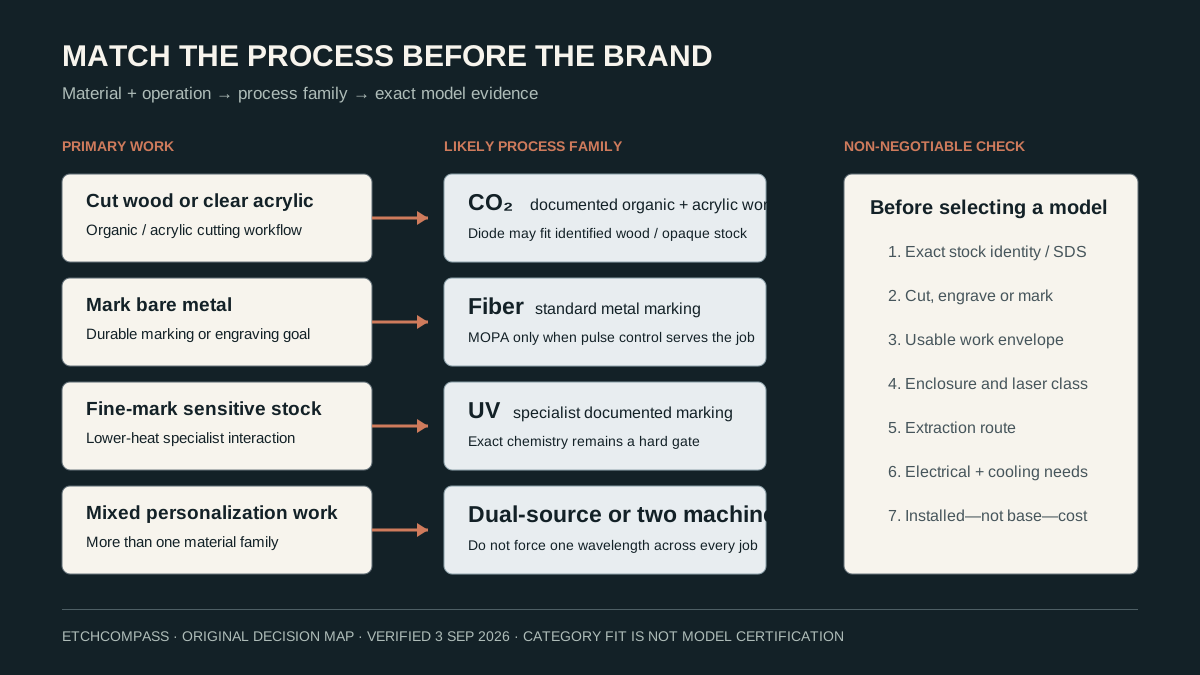
A practical technology split
CO₂ systems are commonly chosen for organic materials and many acrylic workflows. Fiber systems are centered on metal marking and selected plastics. MOPA is a fiber architecture with adjustable pulse behavior for more specialized marking control. UV systems are used for fine, lower-heat marking on selected sensitive materials. Diode systems can be effective for documented wood and opaque-material workflows but are not substitutes for every CO₂ task.
The exact model, module, lens and material still matter. A category fit is permission to continue research—not proof that a specific job is documented.
- Separate cutting from surface marking.
- Separate bare metal from coated or anodized metal.
- Separate clear acrylic from colored opaque acrylic.
- Check the complete system, not only the source wattage.
Then test the full installation
After process fit, compare usable area, object height, pass-through or rotary support, machine dimensions, weight, electrical input and the documented extraction route. Accessories that make a workflow possible belong in the installed-cost calculation.
Use the Finder to eliminate process mismatches, the compatibility checker for material evidence and the workspace planner before treating any machine as a final candidate.
Decision criteria
Primary and authoritative sources
A source link supports the stated fact; it is not an endorsement.